
“What’s a Squashie?” was Mitchell Cohen’s initial reaction when customers asked him if he had Taylor Swift’s favorite candy in stock.
It turned out that he did have it. The chewy, fruit-flavored gummies he’d been carrying in one flavor suddenly sold out, and people kept asking for them. He realized he had to source all ten varieties from England. To this day, the store keeps selling out of them.
“You have to really listen to your customers,” Cohen said, surrounded by walls filled with treats and trinkets all the way up to the tin ceiling tiles. “If two people ask me about something, I got to look into it.”
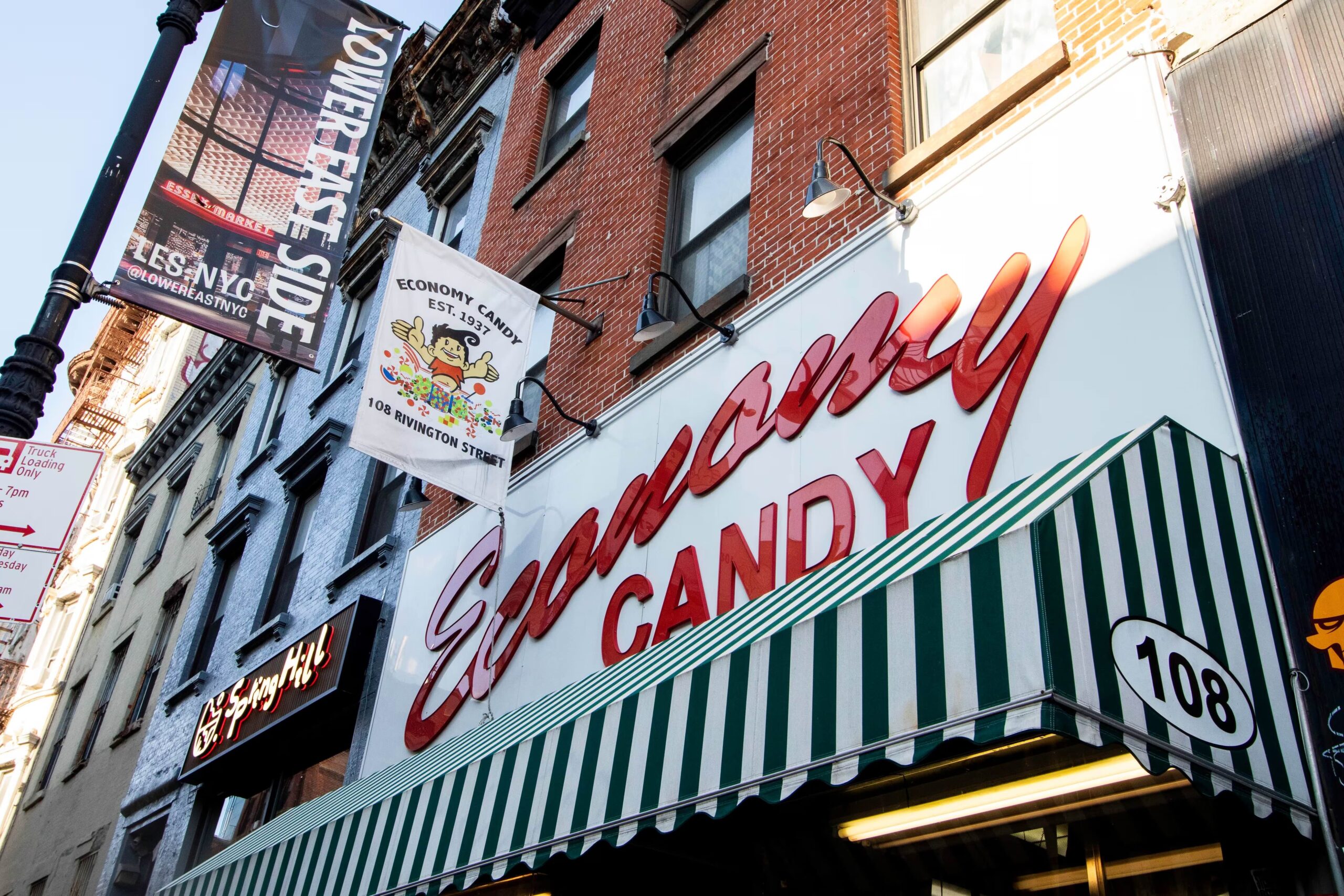
This is how Economy Candy, a third-generation candy store, survives: by balancing 87 years of history with Taylor Swift fans hunting for British gummies. By keeping candy cigarettes on shelves alongside imported Asian snacks. By honoring the past while staying present enough to notice what’s trending.
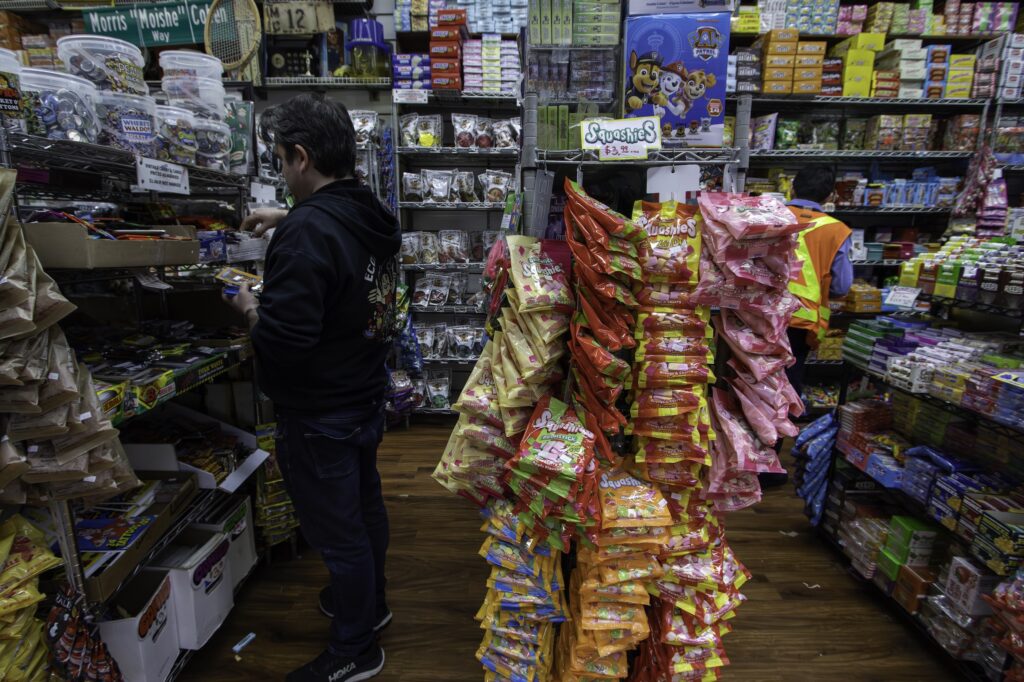
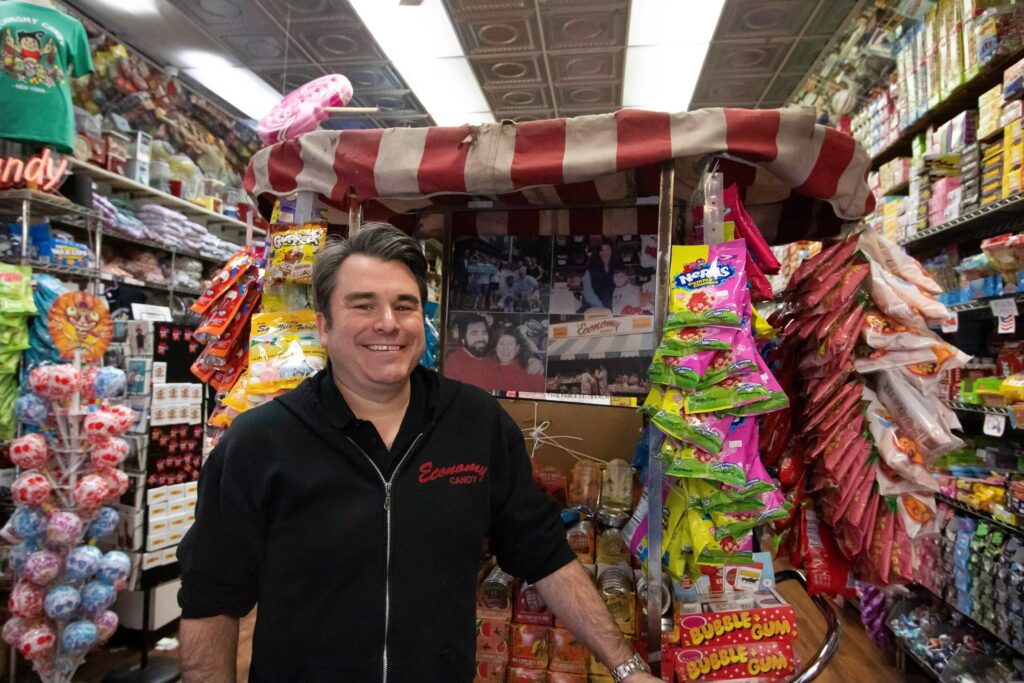
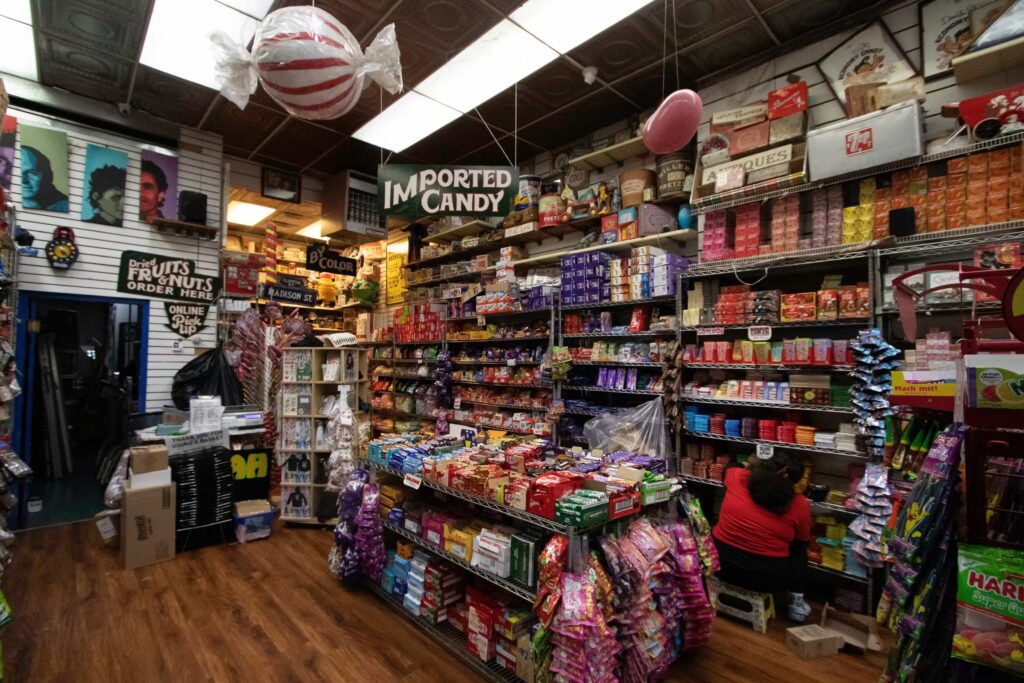
At the store located at the corner of Essex and Rivington Streets on the Lower East Side, giant lollipops the size of dinner plates hang like ornaments overhead, suspended above narrow aisles so tightly packed with candy that customers must turn sideways to pass each other. Vintage tchotchkes and toy boxes sit on top of the tall shelves, in the scant space between merchandise and ceiling. Wearing his black Economy Candy T-shirt, Cohen moved through the store, checking inventory while helping customers. He’s been navigating these aisles since before he could see over the counter.
“I literally would come to work with my parents,” Cohen said. “I remember maybe [being] about four years old. My dad would put down a milk crate by the register, and I would have to do the change for customers by mental math.” He laughed at the memory. “Even if the line was down all the way to the end, I’d be like, ‘all right, it’s $10.32, they gave $11, what’s the change?’”
When he took over from his parents 13 years ago, Cohen inherited not just a business but a repository of memory. Generations back, the store originally opened as a shoe and hat repair shop with a pushcart outside selling candy. But during the Great Depression, when few people had money for clothing repairs, the business fully pivoted to something cheaper and more essential — happiness, sold by the piece. Economy Candy was established 1937, and after returning from World War II, Cohen’s grandfather Morris “Moishe” Cohen and his brother-in-law took over and finished transforming the business into the candy emporium it remains today.
“It was always the Cohen women behind the Cohen men,” Cohen said, crediting his grandmother and mother for pushing the family to preserve what they’d built. His parents took over in the early ’80s, navigating a Lower East Side that had become “not a great place.” Crime was high, foot traffic was low and the neighborhood’s economic decline made running a candy store precarious. It was “touch and go,” Cohen said, requiring constant pivots in what they stocked just to keep the doors open.
Now, luxury condos tower over Rivington Street, but Economy Candy persists. In the summer of 2023, the city officially renamed the corner “Morris ‘Moishe’ Cohen Way” in recognition of what the store represents: steadfastness, continuity and an insistence that some things shouldn’t disappear.
Kim Suttell, a longtime customer who recently browsed the aisles for her Christmas candy shopping, said she was struck by the history. She was drawn to the store by the variety of stock and the nostalgia that comes with it.
“If you’re a New Yorker, you just know it! Everybody starts in the Lower East Side when they’re young, so yeah, everybody gets here eventually,” Suttell said.
Cohen’s path to running Economy Candy wasn’t straightforward. After business school, he went to Wall Street, enjoying the work but unable to escape the pull of the family store. Even then, he was expected to come in on Sundays during the busy season.
“My fiancée, or girlfriend at the time, now my wife, was pretty adamant about me getting out of finance,” Cohen said. “She had a whole folder full of pictures of us on vacation, of me on my Blackberry.”
In 2013, he made the change. His parents were ready to step back. He was ready to step in.
The store’s inventory has swelled under Cohen’s watch. Economy Candy’s reach also now extends beyond individual shoppers. The store has supplied candy for Black Tap — a restaurant chain known for its elaborate, over-the-top milkshakes with locations in New York, Singapore and Switzerland. Food Network shows have called on Economy Candy to supply a thousand pounds of candy for sets.
Cohen has also invested more in the imported section, which used to occupy just one shelf but now takes up half the store. “[We have] things from Asia, things that I wouldn’t have thought ever that we would have been carrying,” Cohen said. “And now it’s a big seller for us.”
But adaptation has had its costs. Before Trump’s tariffs, the prices Cohen’s suppliers charged changed once a year, maybe by 2%. Now, Cohen said that he receives emails monthly announcing 15%, 20%, even 30% increases due to tariffs and inflation. Some imported chocolate bars that sold for $3.99 three years ago now cost $8.99, a price Cohen has no choice but to pass on to customers.
It’s not the first crisis Cohen has had to navigate; the pandemic nearly put Economy Candy out of business. Cohen and his wife pivoted online, set up tables outside on weekends and sold mystery bags for $10. “We used that time to put in a lot of new things,” Cohen explained, new floors, a Square payment system and branded bags. This year, that digital presence paid off when several videos featuring Economy Candy went viral on social media. The artist Devon Rodriguez, who has 9.5 million followers on Instagram, interviewed Cohen in the store, which he noticed helped boost foot traffic.
Through all the changes, Economy Candy remains a family affair. Cohen and his wife come in every day. Each morning, they drop their daughter off at daycare before taking the bus to the store, spending those 30 minutes answering emails and processing orders.
His grandfather, who lived until 2015, was able to see Cohen take over. “He’s just happy that we kept running it,” said Cohen as he straightened a display of imported Skittles. “My dad did things differently than [his dad] did; I did things differently than my dad did. It’s all about you doing it your way. It’s a family business, so it’s still going to have the same essence.”
A few minutes later, Cohen was back at his clipboard, making notes about what needed restocking. A delivery truck pulled up outside, and employees began unloading boxes onto the sidewalk. The aisles filled again with people seeking a variety of chocolate bars from Switzerland, gummy bears from Germany and, of course, the sought-after Squashies.